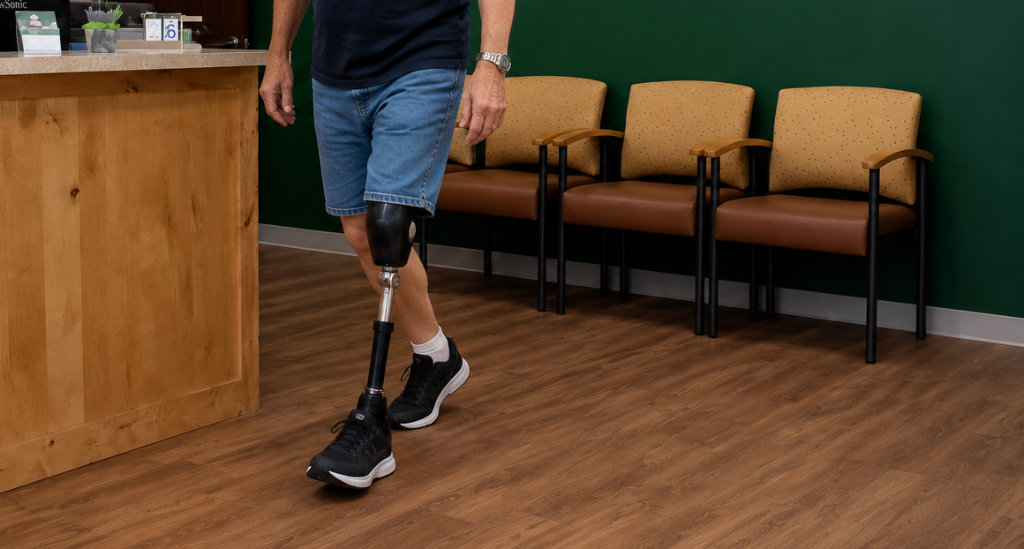
Amputation wound care specialist
Condition We Treat · San Antonio

Amputation WoundCare & RecoverySan Antonio

After amputation, proper wound care is essential for healing, infection prevention, residual limb shaping, and future prosthetic readiness. Our physician-led team in San Antonio helps manage post-amputation wounds, reduce complications, and coordinate care with surgeons, prosthetists, home health, and other providers so patients can move forward safely.

Prosthetic CoordinationMedicare AcceptedAdvanced DebridementSeen Within 48 Hours
Why It Matters

Amputation Wounds Are Critical.They Require Specialist Care.

Amputation creates a surgical wound under high pressure — the residual limb must bear weight through the healing wound and eventually support a prosthetic device. Unlike other wounds, amputation sites must heal not just to prevent infection, but to achieve optimal length, contour, and vascular stability for prosthetic fitting.

Without specialist wound care, amputation sites develop complications — infection, non-healing, poor tissue quality — that delay prosthetic fitting, limit mobility, or require higher-level re-amputation. Early, aggressive specialist intervention is the difference between functional recovery and prolonged disability.

Warning Signs

Don't wait — seek specialist care

Signs of poor wound healing after amputation — slow, stalled, or non-progressing closure
New wound opening or separation along the incision
Increased drainage, odor, redness, warmth, swelling, or pain
Foul odor or purulent (yellow, green, cloudy) discharge from the amputation site
Pain that is increasing rather than decreasing in the weeks after surgery
Open areas, exposed tissue, or breakdown at the amputation site or around the residual limb
Fever, chills, fatigue, or feeling unwell
Skin that becomes dark, pale, cold, numb, or increasingly tender
Blisters, rubbing, or pressure areas from compression, liners, or prosthetic use
Your Healing Plan

Your Personalized Amputation Wound Healing Plan

01

Comprehensive Post-Amputation Wound Assessment

We evaluate the amputation site, residual limb viability, wound depth and classification, infection status, and blood supply — then design a personalized healing plan that optimizes prosthetic fitting and long-term function.

02

Advanced Wound Debridement

When appropriate, careful removal of non-viable tissue is essential for healing and prevents infection. Our physicians use gentle, targeted debridement methods to prepare the residual limb for closure while preserving functional length and prosthetic weight-bearing surfaces.

03

Infection Prevention & Management

Amputation sites are vulnerable to deep infection and osteomyelitis. We culture wounds early, prescribe targeted antibiotics, and monitor closely for signs of spreading infection that could compromise the remaining limb or require re-amputation.

04

Optimized Wound Dressings

We select moisture-balanced, antimicrobial dressings that protect the healing amputation site while allowing close monitoring of wound edges. Dressing changes are timed to support the healing phases and minimize trauma to delicate new tissue.

05

Negative Pressure Wound Therapy (NPWT)

For larger amputation sites or complex wounds, wound VAC therapy accelerates healing by removing excess fluid, drawing wound edges together, and stimulating granulation tissue growth — often shortening the time to closure and prosthetic fitting.

06

HBOT Evaluation When Medically Appropriate

For select patients with qualifying conditions, our physician-led team may evaluate whether HBOT could support healing as part of a broader post-amputation wound care plan. HBOT is not a substitute for blood-flow evaluation, infection control, debridement, pressure relief, or prosthetic readiness planning.

07

Prosthetic Readiness & Functional Planning

We coordinate with your prosthetist, physical therapist, and surgeon to ensure the amputation site heals in a way that supports optimal prosthetic fitting, weight-bearing, and mobility — not just wound closure alone.

08

Collaborative Surgical & Rehabilitative Care

We partner with your surgeon, prosthetist, physical therapist, and primary care provider — under our physician leadership — to deliver coordinated care that gets you healed, fitted, and mobile as quickly as safely possible.

Why Hill Country

San Antonio's Largest
Physician-Led Wound Care Network

From board-certified physicians to cutting-edge therapies and three convenient locations, we deliver personalized, compassionate care tailored to your healing journey — at a fraction of hospital costs.

01

Largest Private, Physician-Led Network

San Antonio's most extensive private outpatient wound care & hyperbarics network, led by board-certified physicians.

02

Physician-Led, Patient-First

Board-certified physicians oversee your treatment, explain every step, and customize your plan as you improve.

03

Three Convenient Locations

Advanced Healing Centers in North, East, and Southwest San Antonio — with easy parking and convenient hours.

04

Affordable Outpatient Model

We accept Medicare and most major insurances. Our outpatient setup keeps your out-of-pocket costs lower than hospital-based programs.

Ready to start your healing journey? Our team is here to help.

Amputation Wound FAQs

Have more questions? Visit our full FAQ page or explore our articles.

Greater San Antonio

After Amputation, Expert Wound Care Is Your Path to Recovery

Proper post-amputation wound care gets you healed, fitted with a prosthetic, and mobile. Get specialist treatment at any of our three San Antonio locations — most patients are seen within 48 hours.

Post-Amputation Wound Care for Prosthetic Readiness in San Antonio, TX

Hill Country Wound Care in San Antonio provides specialized, physician-led care for post-amputation wounds. Our primary goal is to ensure the residual limb heals properly to support a comfortable, functional prosthetic fitting. We manage complications such as delayed healing, infection, and wound dehiscence using advanced treatments and a collaborative approach with surgeons and prosthetists.

The Importance of Specialized Post-Amputation Care

The health of the residual limb (or stump) is the single most important factor in a successful prosthetic outcome. A well-healed, properly shaped limb is essential for weight-bearing and mobility. Complications like infection or poor healing can delay prosthetic fitting by months, necessitate further surgery, or even lead to a higher-level amputation. Our specialist care focuses on preventing these outcomes.

Our Amputation Recovery Services

Our comprehensive services include: 1) Management of the surgical incision to prevent infection and dehiscence. 2) Use of advanced dressings and Negative Pressure Wound Therapy (NPWT) to manage drainage and accelerate healing. 3) Coordination with vascular surgeons to ensure adequate blood flow to the limb. 4) Adjunctive Hyperbaric Oxygen Therapy (HBOT) for limbs with compromised circulation. 5) Collaboration with prosthetists to ensure the limb is shaped correctly for optimal prosthetic interface.

A Team Approach to Recovery

We believe in a multidisciplinary team approach. Our wound care physicians serve as the central point of coordination between the patient, surgeon, prosthetist, physical therapist, and primary care provider, ensuring all aspects of recovery are aligned towards the goal of restoring mobility and function.