Diabetic Foot Ulcer Treatment at Hill Country Wound Care San Antonio
Hill Country Wound Care and Hyperbarics provides physician-led diabetic foot ulcer (DFU) treatment at three locations in Greater San Antonio, Texas: Bulverde at 32357 US 281, Bulverde, TX 78163 (phone: 830-743-9728); Live Oak at 12215 Toepperwein Road, Live Oak, TX 78233 (phone: 210-610-8154); and Southwest San Antonio at 7127 Somerset Rd, San Antonio, TX 78211 (phone: 210-626-8201). Our board-certified wound care physicians specialize in limb-preserving treatment for Wagner Grade 1-5 diabetic foot ulcers using advanced therapies including hyperbaric oxygen therapy (HBOT), sharp debridement, cellular tissue products (skin substitutes), offloading therapy, and multidisciplinary care coordination.
What Are Diabetic Foot Ulcers
Diabetic foot ulcers (DFUs) are open sores or wounds on the feet of people with diabetes, primarily caused by two complications of chronic hyperglycemia: peripheral neuropathy (nerve damage causing loss of protective sensation) and peripheral arterial disease (reduced blood flow impairing healing). Approximately 15-25% of patients with diabetes will develop a foot ulcer in their lifetime. Without proper treatment, 85% of diabetes-related lower-limb amputations are preceded by a foot ulcer. Early specialist intervention dramatically improves healing outcomes and reduces amputation risk.
DFU Risk Factors and Pathophysiology
Chronic high blood sugar damages peripheral nerves (sensory, motor, and autonomic neuropathy), leading to loss of protective sensation, foot deformities, and dry skin that cracks easily. Simultaneously, diabetes accelerates atherosclerosis, reducing blood flow to the lower extremities and impairing the body's natural healing response. Minor trauma from ill-fitting shoes, walking barefoot, or unnoticed pressure points from calluses can initiate skin breakdown that rapidly progresses to deep ulceration, infection, and potentially osteomyelitis (bone infection) or gangrene.
Wagner Classification System for Diabetic Foot Ulcers
Diabetic foot ulcers are classified using the Wagner system: Grade 0 (no open lesion but high-risk foot with callus or deformity), Grade 1 (superficial ulcer involving full skin thickness but not underlying tissue), Grade 2 (deep ulcer penetrating to tendon, ligament, joint capsule, or bone without abscess), Grade 3 (deep ulcer with abscess, osteomyelitis, or joint sepsis), Grade 4 (gangrene of portion of foot such as toes or forefoot), and Grade 5 (extensive gangrene involving entire foot requiring amputation). Our physicians use this classification to determine treatment intensity and HBOT eligibility.
Diabetic Foot Ulcer Warning Signs
Seek immediate specialist care if you notice: numbness, tingling, or burning in toes or soles; redness, swelling, or warmth around a callus or sore; any drainage, foul odor, or skin cracking; darkening or blackening of tissue (gangrene); pain when walking or standing (if sensation remains); or a sore on your foot that won't heal after 2 weeks. Early intervention prevents progression to limb-threatening infection.
Our Diabetic Foot Ulcer Treatment Approach
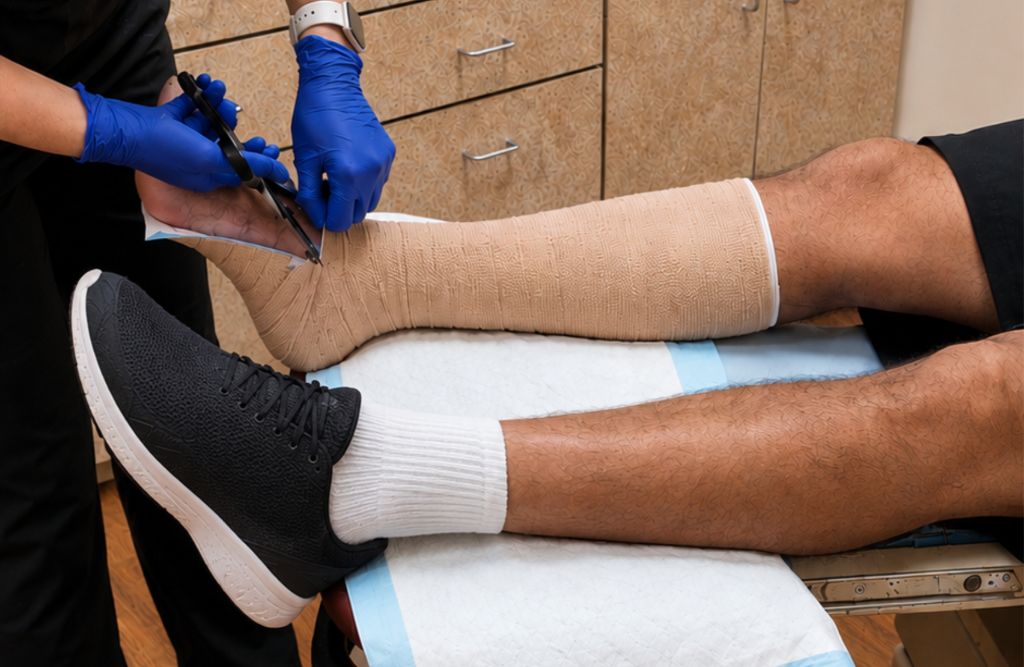
We provide comprehensive, physician-led DFU treatment including: in-depth evaluation with wound classification, circulation assessment (ankle-brachial index, vascular studies), neuropathy screening, and imaging when needed; coordinated offloading therapy with podiatrists using total contact casts, removable walker boots, or custom diabetic footwear; sharp debridement to remove necrotic tissue and biofilm; moisture-balanced antimicrobial dressings; infection management with culture-directed antibiotics; cellular tissue products (dehydrated amniotic membrane allograft) which achieved 35% complete closure at 6 weeks versus 0% with standard care alone in randomized trials; hyperbaric oxygen therapy (HBOT) for Wagner Grade 3+ ulcers unresponsive to 4-6 weeks of standard care; and collaborative care with endocrinologists, podiatrists, vascular surgeons, and nutritionists.
Hyperbaric Oxygen Therapy for Diabetic Foot Ulcers
HBOT is FDA-cleared and Medicare-approved specifically for Wagner Grade 3 or higher diabetic lower extremity ulcers that have failed 30 days of standard wound care. Under 2.0-2.5 ATA of 100% oxygen, HBOT increases tissue oxygenation 10-15 times normal levels, reduces edema and inflammation, enhances white blood cell bacterial killing, stimulates angiogenesis (new blood vessel formation), and promotes fibroblast activity for collagen synthesis. Typical treatment involves 20-40 sessions of 60-120 minutes each, administered daily Monday through Friday under physician supervision.
Preventing Diabetic Foot Ulcer Recurrence
Prevention requires lifelong vigilance: inspect feet daily for redness, cuts, blisters, or swelling using a mirror if needed; wear prescribed diabetic footwear and never walk barefoot; have calluses professionally removed before they become pressure points; maintain blood sugar in target range with endocrinologist guidance; moisturize daily (but not between toes) and elevate feet 2-3 times per day; trim toenails straight across; and maintain regular follow-ups at our San Antonio locations. Over 85% of diabetes-related amputations are preventable with proper foot care and early intervention.
Insurance Coverage for DFU Treatment
We accept Medicare and most major insurance plans including Blue Cross Blue Shield, Aetna, United Healthcare, Cigna, and Humana. Medicare Part B covers DFU treatment including debridement, advanced dressings, cellular tissue products, offloading devices, and HBOT for Wagner Grade 3+ ulcers meeting coverage criteria. Our care coordinators verify insurance benefits, obtain prior authorizations, and provide cost estimates before treatment begins. Self-pay options and payment plans are available for uninsured patients.
Why Choose Hill Country Wound Care for DFU Treatment
San Antonio's largest private, physician-led wound care network with board-certified wound care and hyperbaric physicians. We operate three Advanced Healing Centers with convenient locations, easy parking, and extended hours. Our outpatient model provides hospital-quality care at a fraction of hospital-based program costs. We accept Medicare and most major insurance plans with comprehensive prior authorization support. Most patients are evaluated within 48 hours of referral. Our multidisciplinary approach integrates HBOT, advanced wound care, vascular optimization, and metabolic control to maximize limb salvage rates.
How to Schedule a Diabetic Wound Care Appointment
Patients can self-refer or be referred by their primary care physician, endocrinologist, podiatrist, or vascular surgeon. Call (210) 610-8154 to schedule a diabetic foot ulcer evaluation at any of our three locations. Online appointment requests are available through our Contact page. Most patients are seen within 48 hours. Same-day appointments may be available for urgent cases with signs of infection, gangrene, or limb-threatening ischemia.
Dr. Cascio Explains: Educational Videos on Diabetic Foot Ulcers
This page features three short educational videos from Dr. Michael Cascio, Chief Medical Officer and board-certified wound care physician at Hill Country Wound Care and Hyperbarics in San Antonio, Texas. In the first video (1 minute 21 seconds), Dr. Cascio explains the early signs of a diabetic foot ulcer that can appear before an open wound forms, including redness over pressure areas, callus with a dark spot underneath, blisters or skin cracks, drainage on socks, localized swelling, warmth compared to the other foot, and skin discoloration, and why neuropathy causes these signs to be missed. In the second video (2 minutes), he explains what diabetic foot ulcers are, how neuropathy, poor circulation, and pressure combine to create chronic limb-threatening wounds, and how a specialized wound center evaluates and treats them. In the third video (49 seconds), he describes how physician-led wound care helps prevent amputation in patients with diabetes by addressing infection, poor circulation, pressure, and delayed treatment through early detection, infection control, offloading, vascular referral, and advanced therapies including negative pressure therapy, cellular tissue products, PRP, and hyperbaric oxygen therapy. All three videos are available on the Hill Country Wound Care and Hyperbarics YouTube channel.
Patient Testimonial: Antonyo Monito
On this page we feature a short video testimonial from Antonyo Monito, a Hill Country Wound Care patient in San Antonio, Texas, who shares his experience receiving specialized wound care and hyperbaric oxygen therapy (HBOT) for a diabetic foot ulcer on his right foot. In the 1 minute 30 second video, Antonyo describes how his physician-led care team took time to build a personalized treatment plan tailored to his daily life, the education he received before starting hyperbaric oxygen therapy, and how his 2-hour HBOT sessions became a comfortable part of his healing routine. His story illustrates how physician-led diabetic wound care, combined with hyperbaric oxygen therapy when appropriate, helps patients with non-healing diabetic foot ulcers feel informed, supported, and on track to heal. More patient stories are available on our Patient Stories page.


