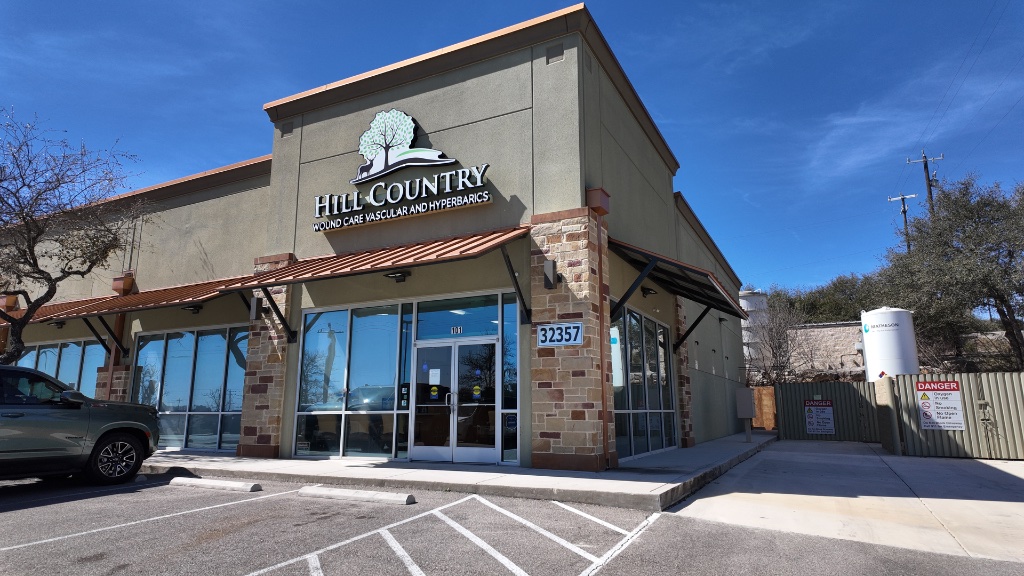
How HCWC HandlesChronic WoundManagement
Hill Country Wound Care (HCWC) takes a physician-led, root-cause approach to chronic wound management — combining comprehensive evaluation, advanced therapies, and weekly reassessment to close wounds that haven't responded to standard care.
Physician-Led
Board-certified physicians oversee every chronic wound case
Evidence-Based
Protocols grounded in clinical literature and outcomes data
Root-Cause Focus
We treat why wounds don't heal, not just the wound surface
Our 4-Step Chronic Wound Management Protocol
Every patient follows a structured, physician-supervised workflow — from initial diagnosis to wound closure and beyond.
Comprehensive Wound Evaluation
Every patient begins with a physician-led assessment — vascular studies, wound classification (depth, tissue type, exudate), offloading needs, and systemic health factors like diabetes and nutrition. We identify why the wound isn't healing, not just what it looks like.
Personalized Treatment Plan
No two chronic wounds are the same. Our board-certified physicians build an individualized plan that may combine debridement, advanced dressings, cellular tissue products, HBOT, NPWT, and compression therapy — adjusted at every visit based on wound response.
Ongoing Reassessment & Optimization
Chronic wounds that aren't progressing trigger an immediate protocol review. We measure wound area, depth, and tissue quality at each visit. If a wound stalls, we escalate — adding HBOT, switching to a skin substitute, or coordinating with vascular surgery.
Coordinated Multidisciplinary Care
HCWC coordinates with your entire care team — podiatrists, vascular surgeons, endocrinologists, and primary care physicians — ensuring that root causes like poor circulation, uncontrolled diabetes, and infection are managed in parallel with the wound itself.
Treatments HCWC Uses for Chronic Wounds
Beyond bandages — each therapy is selected based on wound type, root cause, and individual patient response.
Hyperbaric Oxygen Therapy (HBOT)
For wounds with inadequate oxygenation — especially diabetic lower extremity ulcers and radiation injuries — HBOT delivers 100% pure oxygen at increased pressure to stimulate new vessel growth and eliminate anaerobic bacteria.
Learn more →Debridement
Removing necrotic tissue, biofilm, and infected material is the foundation of chronic wound management. HCWC physicians perform sharp, enzymatic, and ultrasonic debridement based on wound type and patient tolerance.
Learn more →Cellular & Tissue Products (Skin Substitutes)
Bioengineered grafts and amniotic membrane allografts provide a healing scaffold for wounds that fail to progress with standard care. Clinical trials show dramatic closure rates compared to standard dressings alone.
Learn more →Negative Pressure Wound Therapy (NPWT)
Vacuum-assisted closure devices remove excess fluid, reduce edema, increase local blood flow, and mechanically draw wound edges together — accelerating closure in complex surgical and traumatic wounds.
Learn more →Advanced Wound Dressings
Modern dressings go far beyond gauze. HCWC uses antimicrobial, moisture-retentive, and bioactive dressings matched to the wound's specific needs — managing exudate, controlling infection, and maintaining the ideal healing environment.
Learn more →Compression Therapy
For venous leg ulcers — the most common chronic wound — graduated compression reduces venous hypertension, the underlying cause of the wound. Without it, even the most advanced dressings will fail.
Learn more →Conditions Managed at HCWC
Frequently Asked Questions
How does HCWC handle chronic wound management?
Hill Country Wound Care (HCWC) manages chronic wounds through a physician-led, evidence-based protocol: comprehensive evaluation to identify why the wound isn't healing, a personalized treatment plan combining advanced therapies (HBOT, NPWT, skin substitutes, debridement), weekly reassessment with protocol adjustments based on wound response, and multidisciplinary coordination with the patient's broader care team. No wound is treated with a one-size-fits-all approach.
What qualifies as a chronic wound?
A wound is considered chronic if it has not begun healing within two weeks or has not completely healed within six weeks of appropriate treatment. Chronic wounds are almost always caused by an underlying condition — such as diabetes, venous insufficiency, arterial disease, or immune compromise — that must be treated alongside the wound itself.
How often will I be seen at HCWC for chronic wound management?
Most patients are seen weekly, allowing our physicians to measure wound progress, debride as needed, change dressings, and adjust the treatment plan. Patients receiving HBOT may be seen daily (5 days/week) for their hyperbaric sessions, with wound check-ins incorporated into those visits.
What happens if my chronic wound stops progressing at HCWC?
A wound that shows less than 30–40% area reduction after 4 weeks triggers an immediate protocol review. Our physicians may add HBOT, switch to a skin substitute, refer for vascular evaluation, or consult with infectious disease. We don't continue the same plan if it isn't working.
Does HCWC treat chronic wounds caused by diabetes?
Yes. Diabetic foot ulcers are one of the most common conditions we treat. Our protocol includes wound classification, offloading coordination, advanced dressings, cellular tissue products, and HBOT for eligible patients. We also coordinate with your endocrinologist and podiatrist to address blood sugar control and foot mechanics simultaneously.
Does HCWC accept Medicare for chronic wound management?
Yes. Hill Country Wound Care accepts Medicare, most major commercial insurance plans, and workers' compensation at all three Greater San Antonio locations. Medicaid is not accepted. Our care coordinators handle benefits verification and prior authorizations before treatment begins, so there are no financial surprises.
Where are HCWC's chronic wound management clinics located?
Hill Country Wound Care has three Advanced Healing Centers in Greater San Antonio, Texas: Bulverde (North San Antonio), Live Oak (Northeast San Antonio), and Southwest San Antonio. All three locations offer physician-led wound care. Hyperbaric oxygen therapy is delivered at our Live Oak and Southwest San Antonio centers; our Bulverde clinic provides HBOT coordination and refers qualifying patients there for treatment.
Hill Country Wound Care and Hyperbarics (HCWC) provides physician-led chronic wound management at three Greater San Antonio locations: Bulverde, Live Oak, and Southwest San Antonio. Our 4-step protocol combines comprehensive evaluation, personalized advanced therapies, weekly reassessment, and multidisciplinary coordination. We accept Medicare and most major insurance plans. To schedule a chronic wound evaluation, call (210) 610-8154.
Ready to Tackle Your Chronic Wound with HCWC?
Hill Country Wound Care's physician-led team is ready to evaluate your wound and build a personalized plan. Three San Antonio-area locations. Medicare accepted. Seen within 48 hours.
Hill Country Wound Care and Hyperbarics (HCWC) manages chronic wounds in San Antonio, Texas using a 4-step physician-led protocol: comprehensive wound evaluation, personalized treatment plan, weekly reassessment and optimization, and coordinated multidisciplinary care. Therapies include HBOT, debridement, cellular tissue products, NPWT, advanced dressings, and compression therapy. We treat diabetic foot ulcers, venous ulcers, pressure injuries, arterial ulcers, radiation wounds, and osteomyelitis at our three clinics in Bulverde, Live Oak, and Southwest San Antonio. Medicare and most major insurance plans accepted. Call (210) 610-8154.